Environmental Sustainability Management
Environmental Policy

In 2025, Chroma did not experience any leakage incidents and was not subject to any water resources or environmental violations, penalties, or fines.
Chroma has obtained ISO 14001:2015 environmental management system certification, covering all four of its operating sites (100% coverage). Through the implementation of the Plan-Do-Check-Act (P-D-C-A) management cycle, all pollution sources are managed under standardized procedures and in compliance with legal and regulatory requirements, thereby enhancing environmental performance and strengthening the environmental management system. To ensure the credibility of the quantified data of GHG inventory, third-party verification of ISO 14064-1:2018 was obtained. Chroma addresses climate change, green products and design, and pollution prevention through three key areas of focus, while promoting environmental awareness across the entire organization. With a product life cycle perspective, the Company implements comprehensive management from product design, raw material sourcing, manufacturing processes, and plant operations to end products, after-sales services, and proper legal disposal of waste. This approach aims to minimize negative impacts on climate change and environmental harm throughout the entire product life cycle.
Energy and GHG Management
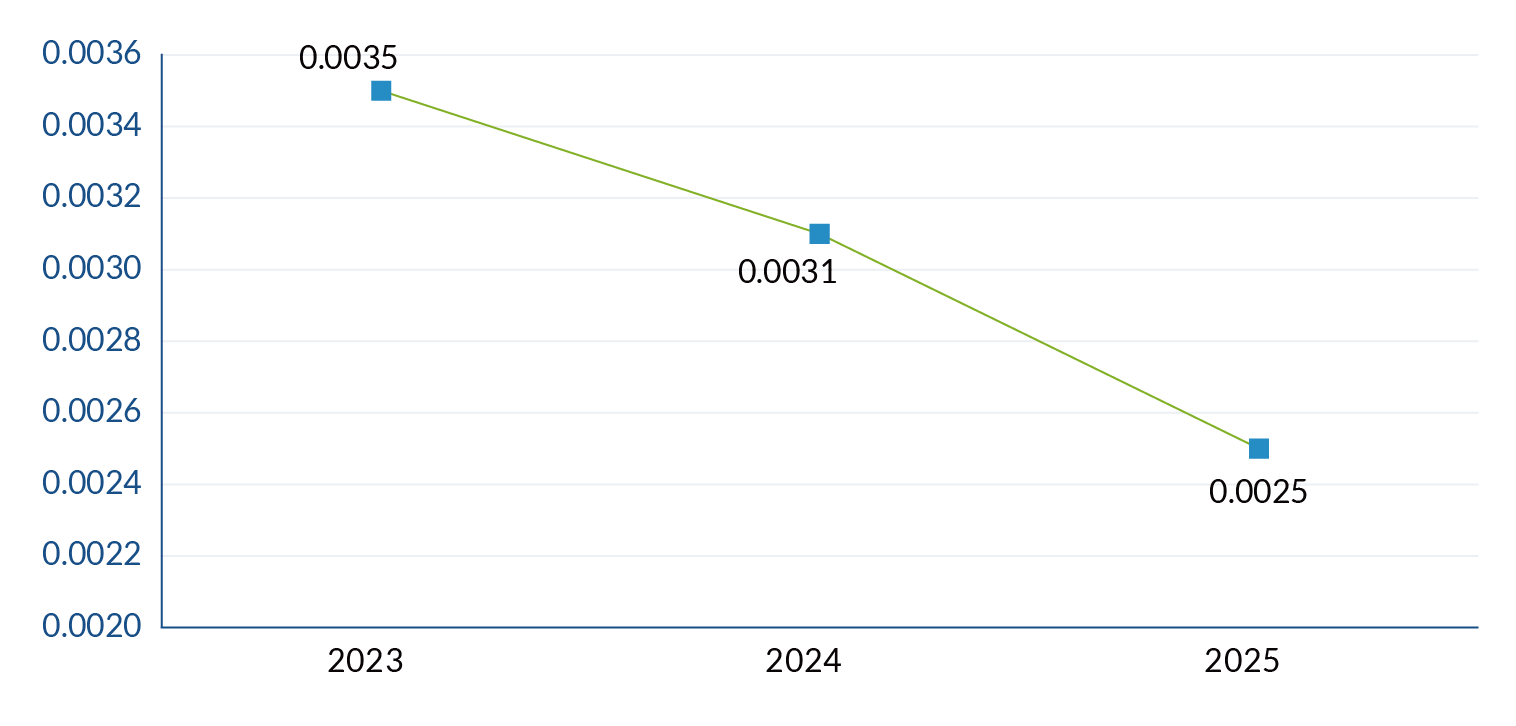
Chroma's energy use primarily consists of externally purchased electricity. Other fuels include natural gas used in the staff restaurant, dormitory, and health center, as well as gasoline for company vehicles and diesel for generators. The energy statistics for the headquarters (including the Huaya Plant), Hsinchu branch, and Kaohsiung branch are summarized in the table below:
Electricity and fuel management
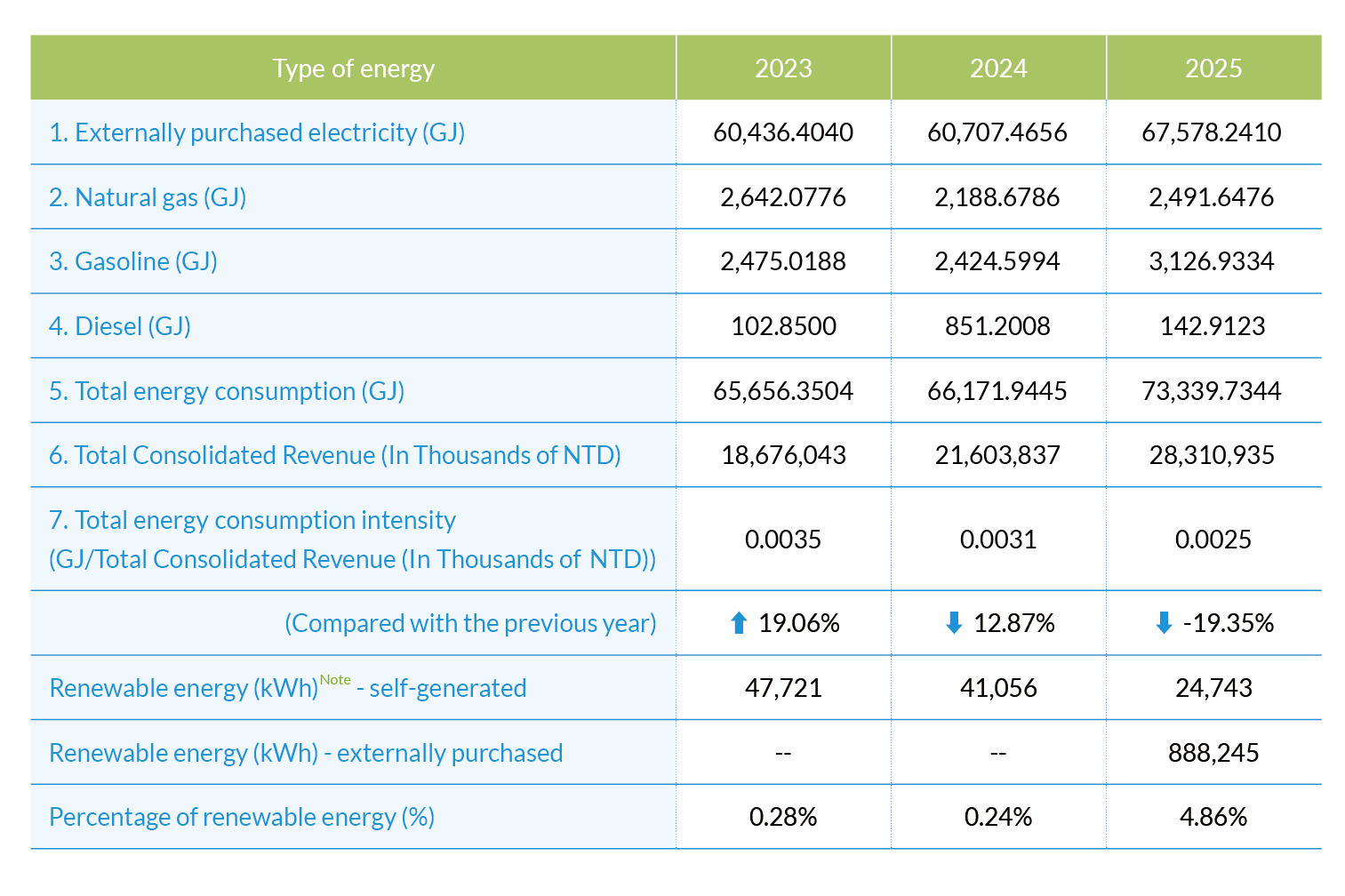
Note 1: Based on contracted capacity and power generation, renewable energy consumption (kWh) has been recorded starting from July 2022.
Note 2: From 2021 to 2023, errors occurred in energy calculations due to incorrect conversion factors when converting various types of energy into joules. The corrected data showed a decrease.
Note 3: The unit for natural gas was incorrectly stated as cubic meters in 2023 and 2024. The figures have been revised to reflect the correct unit of thousand cubic meters.
Note 4: The calorific values used in this report are based on the Energy Product Unit Calorific Value Table issued by the Energy Administration, Ministry of Economic Affairs (December 24, 2024). Conversion factors applied are: 1 kcal = 4,186 J and 1 GJ = 109 J.
Unit: NT$ thousand
GHG Management
Chroma conducts greenhouse gas inventories in accordance with ISO 14064-1:2018 to monitor emissions at its headquarter and all branch offices. Through this inventory process and its results, the Company maintains accurate oversight of its greenhouse gas emissions and has proposed feasible reduction measures based on the findings. To enhance the credibility of greenhouse gas inventory information and reporting, and to improve the overall quality of the inventory process, internal verification is first conducted within the Company. Following this, an impartial third-party verification body is commissioned to carry out external verification in accordance with relevant standards, thereby establishing a comprehensive inventory process and ensuring the accuracy and reliability of the data.
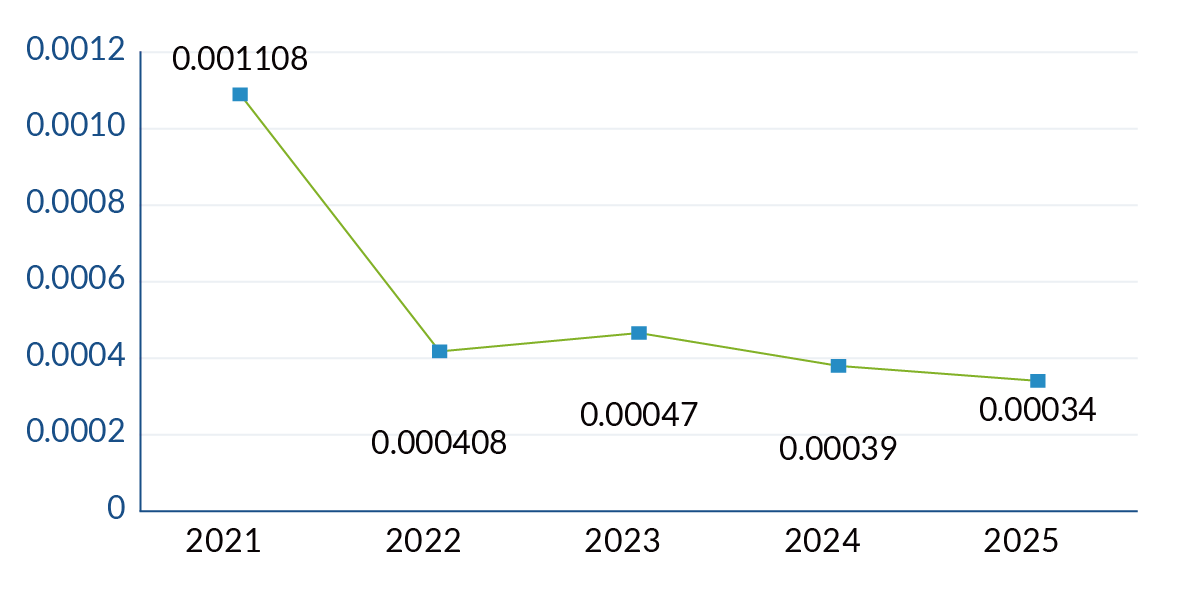
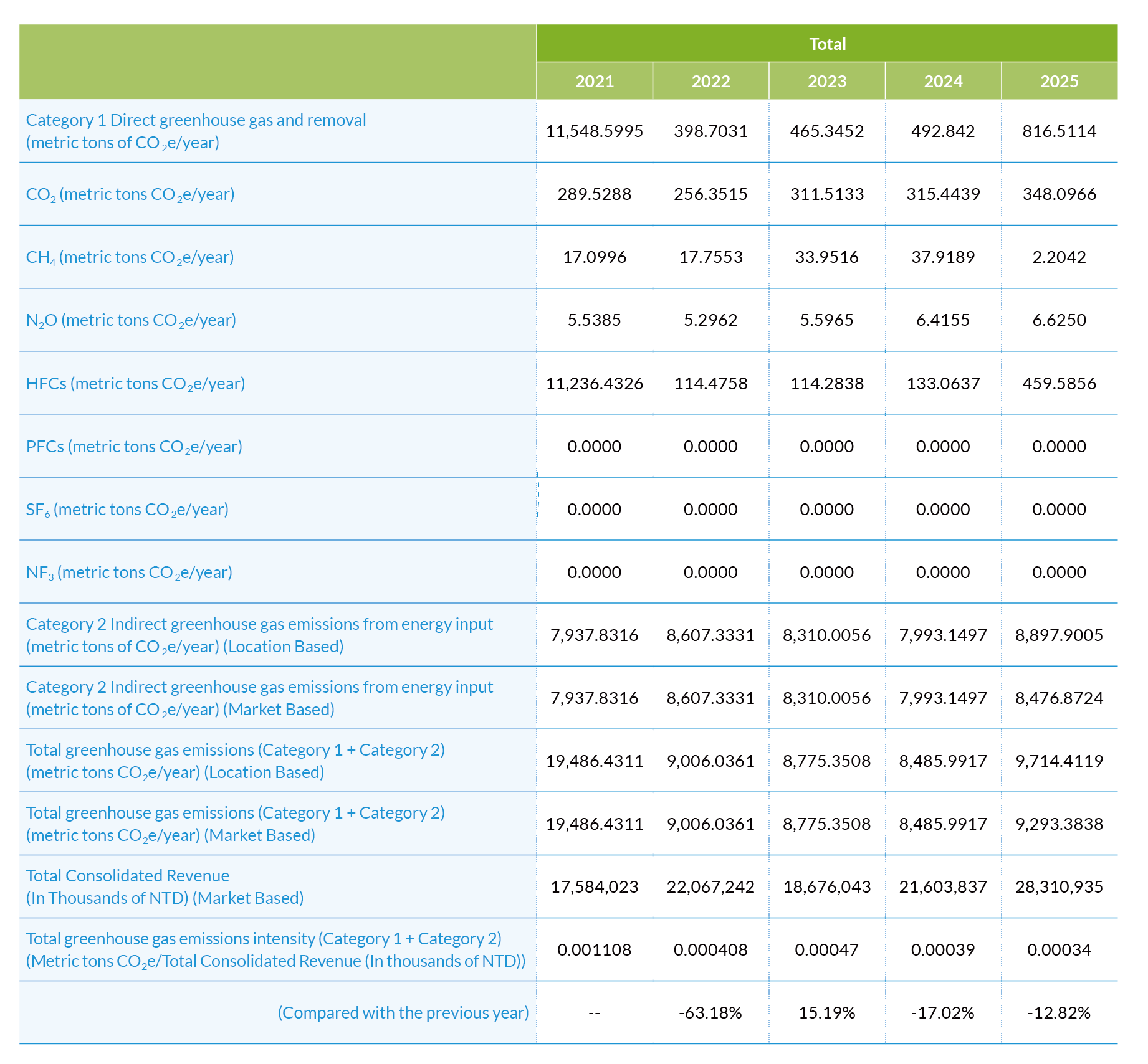
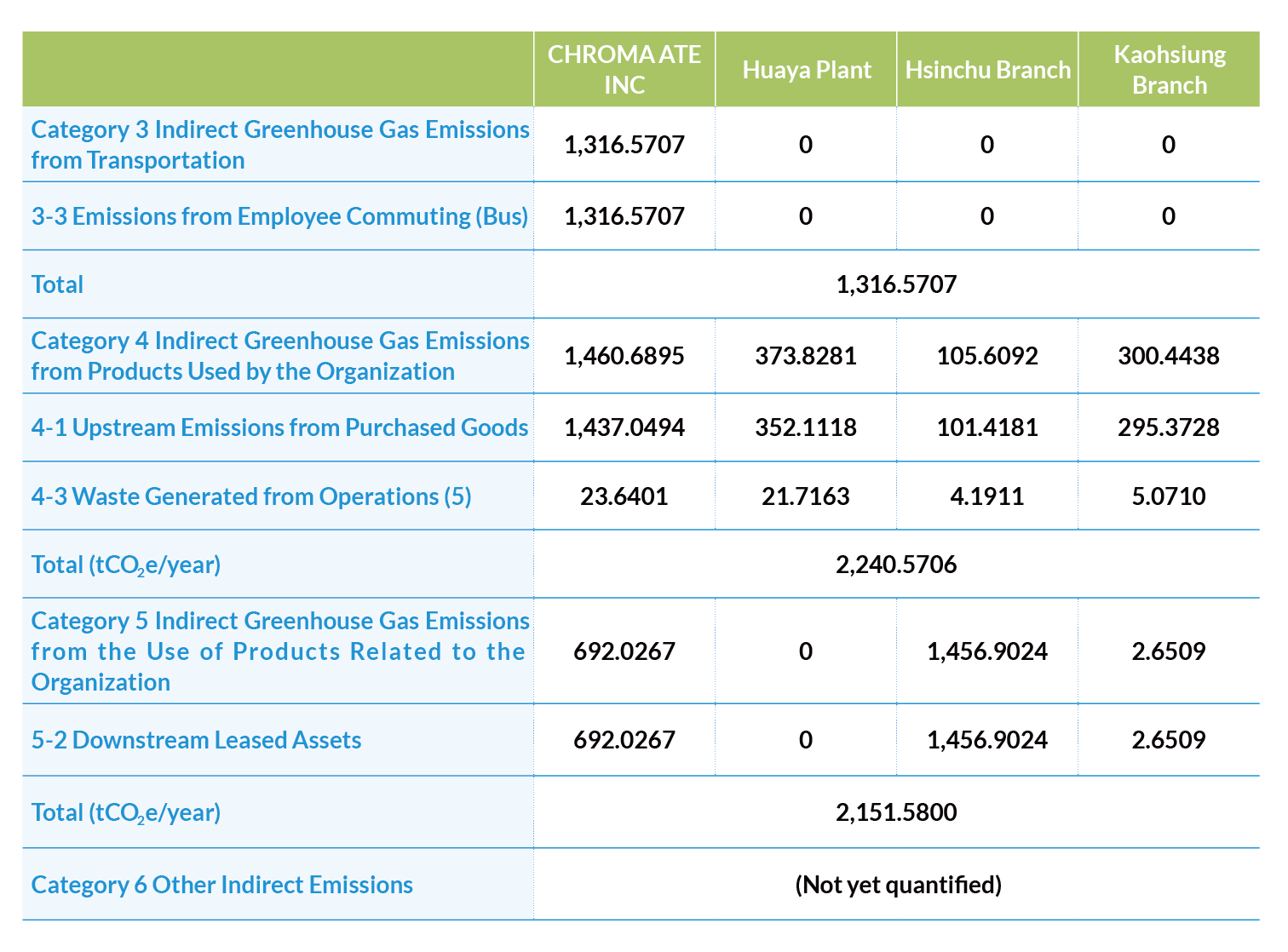
GHG emissions were calculated using the operational control approach and were calculated using the GWP values from the IPCC Sixth Assessment Report. The inventory covers seven types of greenhouse gases: CO2, CH4, N2O, HFCs, PFCs, SF6, and NF3. The quantification is divided into two main categories: Category 1 refers to direct greenhouse gas emissions, including stationary emissions, process emissions, mobile emissions, and fugitive emissions. Category 2 refers to energy indirect greenhouse gas emissions, which result from the consumption of externally purchased electricity. As ISO 14064-1:2018 was adopted as the new standard for inventory and quantification, the year 2021 was designated as the base year. To effectively monitor greenhouse gas emissions, greenhouse gas intensity (measured in metric tons of CO2e per NTD million in consolidated revenue) is used as the key management indicator.
The greenhouse gas emissions intensity in 2025 was 69.31% lower than in the base year. Total GHG emissions from 2022 to 2025 were reduced by more than 50% compared with the base year. In recent years, Chroma's revenue has continued to grow, with its operational scale and energy demand increasing in tandem. In 2025, the expansion of new facilities and the introduction of new equipment led to increased refrigerant filling needs, resulting in higher emissions of hydrofluorocarbons (HFCs) and an approximately 14.47% increase in greenhouse gas emissions (Scope 1 + Scope 2) compared to 2024. The Company will continue to strengthen refrigerant management and equipment maintenance to reduce associated emission risks.
The new plant's renewable energy facilities are expected to become operational in 2026, contributing to increased green electricity usage, improved energy efficiency, and reduced greenhouse gas emission intensity.
(metric tons CO2e / consolidated revenue (NTD thousand)
Reduction Actions and Results
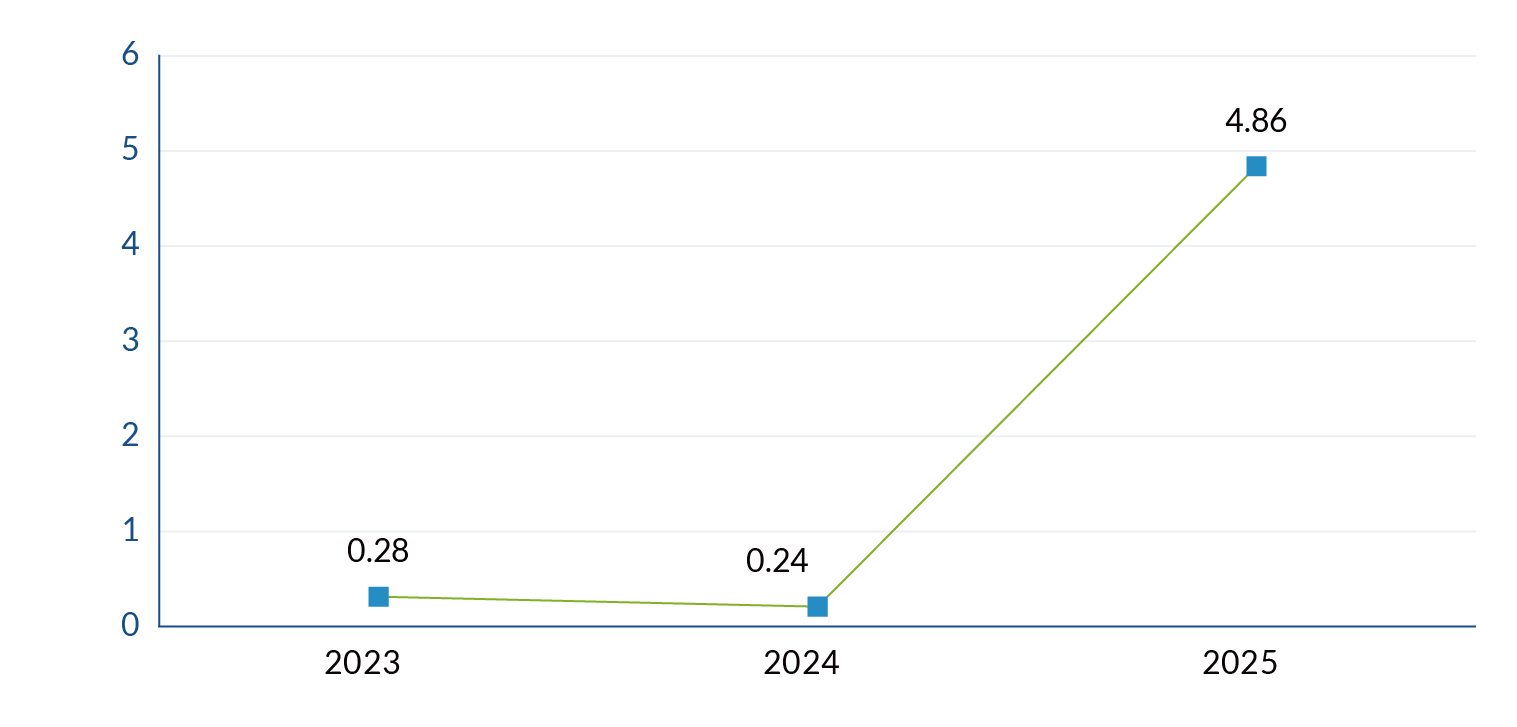
Chroma aims to achieve its target of "net-zero emissions at office sites by 2030; net-zero emissions across all sites by 2050," while proactively responding to stakeholders' expectations regarding renewable energy use. The Company has implemented multiple low-carbon energy initiatives, including purchasing green energy, renewable energy certificates, and installing renewable energy systems, to progressively increase its share of renewable energy use each year. In 2025, Chroma's electricity consumption and renewable energy usage totaled 18,796,685.2 kWh and 912,988 kWh, respectively. Green electricity accounted for 4.86% of total electricity consumption. Starting in 2025, the targets are to increase the proportion of renewable energy by an average of 5% annually, aiming to achieve RE30 by 2030.
In 2025, the share of renewable energy consumption did not meet the annual growth target of 5%, primarily due to a significant increase in overall electricity demand resulting from Chroma's expanded production capacity and operating scale. Chroma has steadily increased its procurement of green energy and promoted self-generated renewable energy initiatives year over year to enhance renewable energy consumption. However, the growth in total electricity consumption has outpaced the increase in renewable energy, thereby limiting the growth of renewable energy as a share of total consumption. In the future, Chroma will continue to assess and expand its use of renewable energy, strengthen energy management mechanisms, and steadily increase the share of renewable energy to achieve its RE30 target by 2030.
In 2025, through process optimization and smart manufacturing, Chroma not only achieved energy savings and carbon reduction but also improved production efficiency, reducing carbon emissions by 259.978 metric tons of CO2e (Scope 2).
Reducing Energy Consumption in Product Burn-in Testing Processes
- For power measurement instruments, energy-efficient equipment is used during the product burn-in process. Intelligent monitoring and data analysis are implemented, with monthly analysis reports generated to quickly adjust and reduce burn-in time, thereby minimizing energy consumption.
- In 2025, power products featured energy recovery functions that enabled power sharing and load burn-in, reducing electricity consumption during the burn-in process by approximately 50%. (Burn-in time was reduced from 24 hours to 12 hours)
Smart production
- Based on customer requirements, the factory integrates standalone products into customized system solutions. Standard accessories from certain standalone products that are not needed are returned to inventory in line with environmental principles, thereby reducing material costs in production.
- MES data is monitored to adjust production pacing, lowering production costs.
- Automated testing for individual boards is optimized to speed up production cycles and reduce costs.
- Full system and equipment testing have been upgraded through smart transformation. Test items are simplified through data analysis, leading to reduced production costs.
- Optimization of full-unit testing time to reduce production costs.
- Introduction of smart electronic component racks and automatic dispensing machines on SMT/DIP production lines to accelerate output and increase capacity.
- Optimization and revision of digitalized process workflows to shorten material preparation and operation time while improving operational accuracy.
- Optimize product work procedures and methods to enhance efficiency.
- In 2025, a review of the PCBA Coating process was conducted. Following a thorough evaluation, precise and unnecessary component coating were implemented, effectively streamlining the process and reducing labor hours.
Improved processes to reduce energy consumption in product testing
- Testing stations were equipped with tri-color light monitoring modules and smart meters to record time intervals and power consumption based on operational status. Analysis reports were generated to identify and address high energy consumption or abnormal usage patterns, allowing for targeted improvements to reduce power waste. In 2025, the implementation of testing stations was fully completed.
- For certain new products in 2025, environmental specifications were defined, requiring production operations to be conducted under controlled conditions. Air conditioning and dust level monitoring systems were introduced to reduce manual inspection time and ensure the quality of the production environment.
Install Solar Power Systems
- To accelerate its net-zero carbon reduction targets, Chroma has installed solar power systems on the rooftop of its second-phase facility, with an expected capacity of 566 kW. The total investment is approximately NTD 23 million. The project was originally scheduled for completion and operation by the end of 2025; however, due to delays in the application process, the completion date has been revised to the first half of 2026.
Water resource management
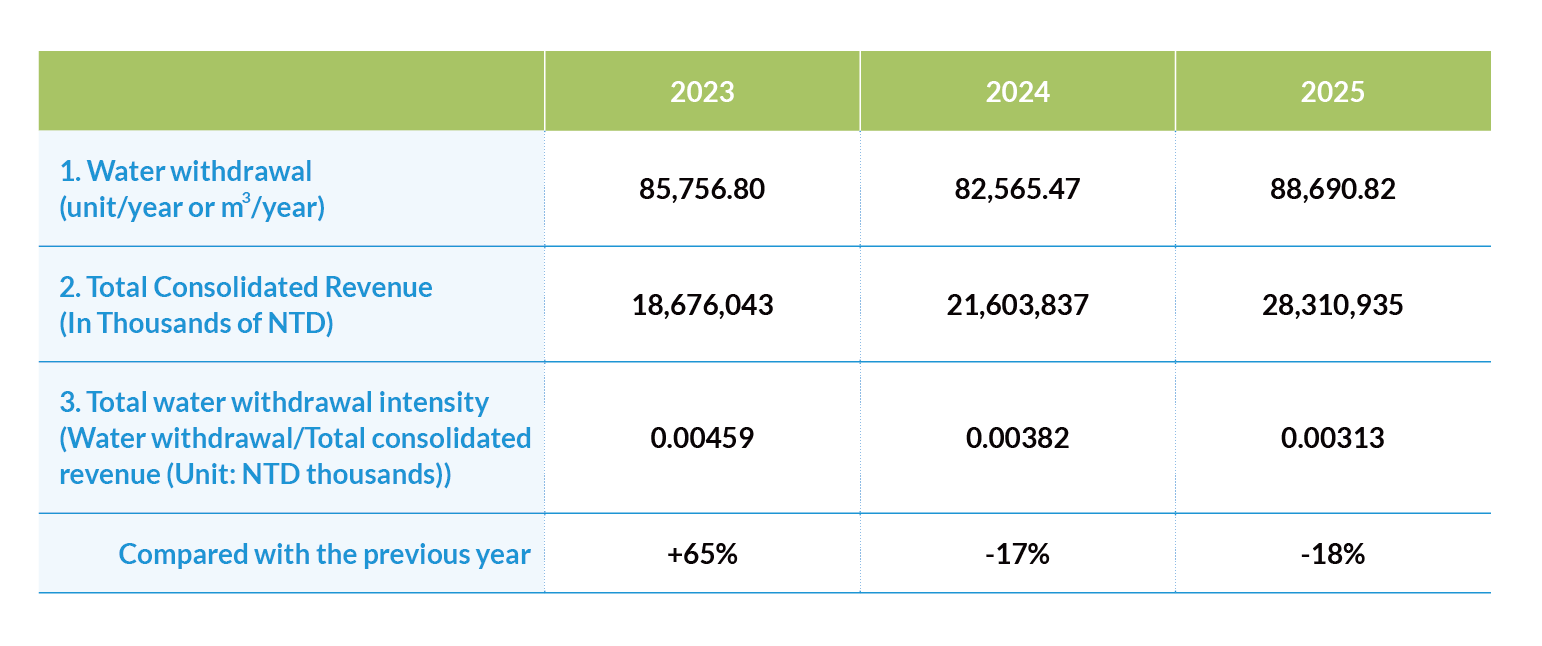
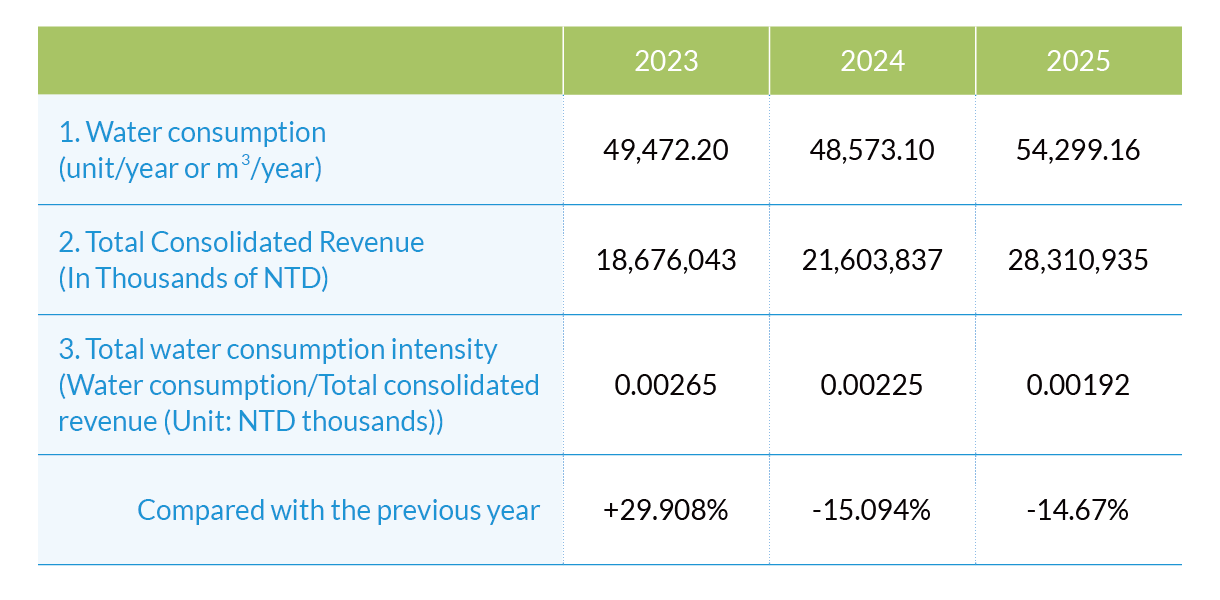
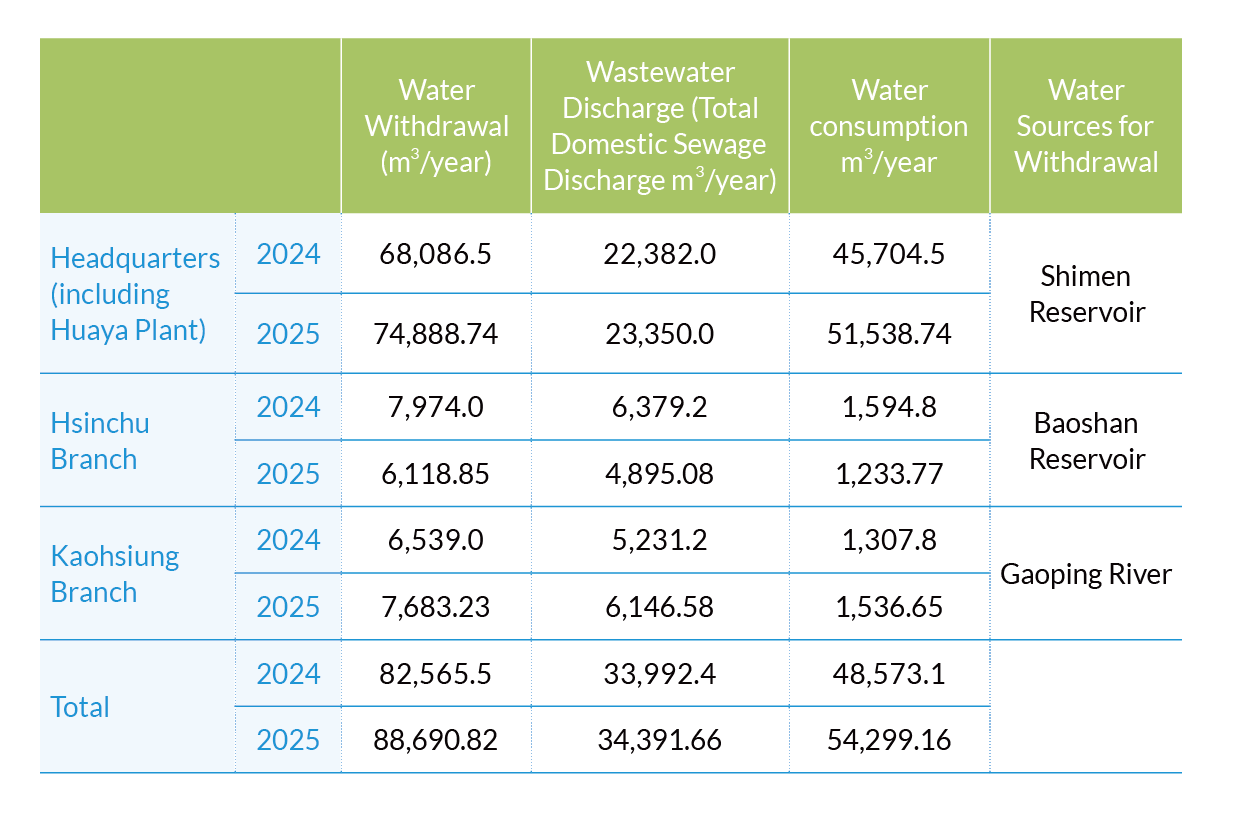
Chroma's headquarters (including the Huaya plant), Hsinchu branch and Kaohsiung branch are located in Huaya Technology Park, Hsinchu Science Park and Nanzih Processing Zone, respectively; none of which are located in environmental protection areas or water-stressed areas. Their water supply comes 100% from municipal water (tap water) and not from protected areas or water sources. Because the manufacturing processes primarily involve assembly and testing, there is no significant demand for water. Water consumption is mainly for employee daily needs and facilityrelated equipment, particularly air conditioning systems. As such, it does not pose a significant environmental impact on water resources or the surrounding ecosystems of water sources. Domestic sewage is either treated by appropriate sewage treatment facilities or discharged directly into the sewer system in accordance with legal requirements. Even so, in addition to conserving electricity, we believe that water is also a valuable global resource. Therefore, reducing water consumption and improving water efficiency are also important tasks. To implement water resource management, the head office building has a rainwater harvesting system. After precipitation and treatment, the water is used as a water source for gardening, to achieve the purpose of water resource protection and conservation. In 2025, total water withdrawal intensity declined by 18% compared to 2024.
Wastewater volume for the Hsinchu and Kaohsiung branches is estimated at 80% of water withdrawal due to the absence of water meters
(headquarters (including Huaya Plant) + Hsinchu Branch + Kaohsiung Branch)
Waste Management
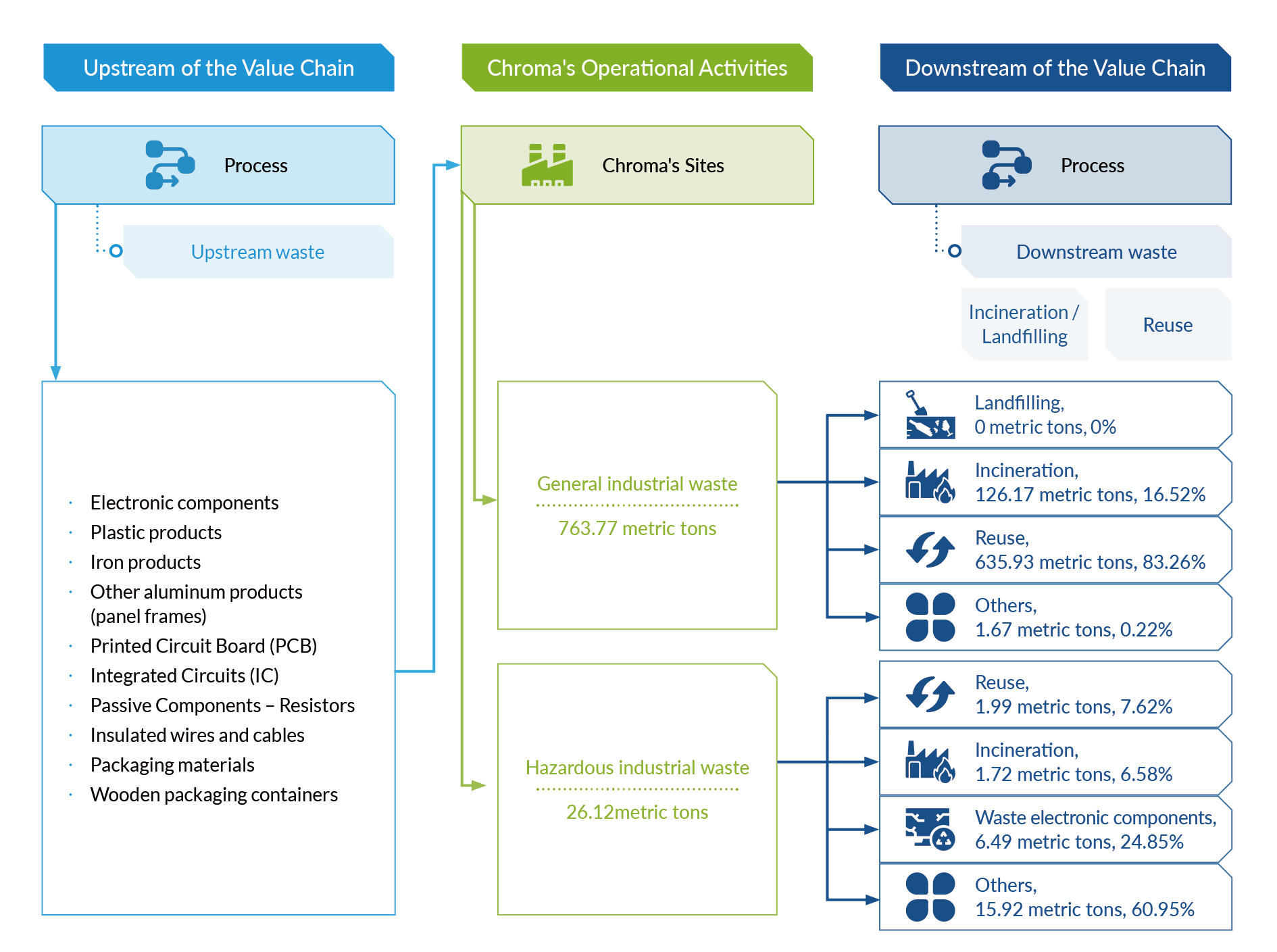
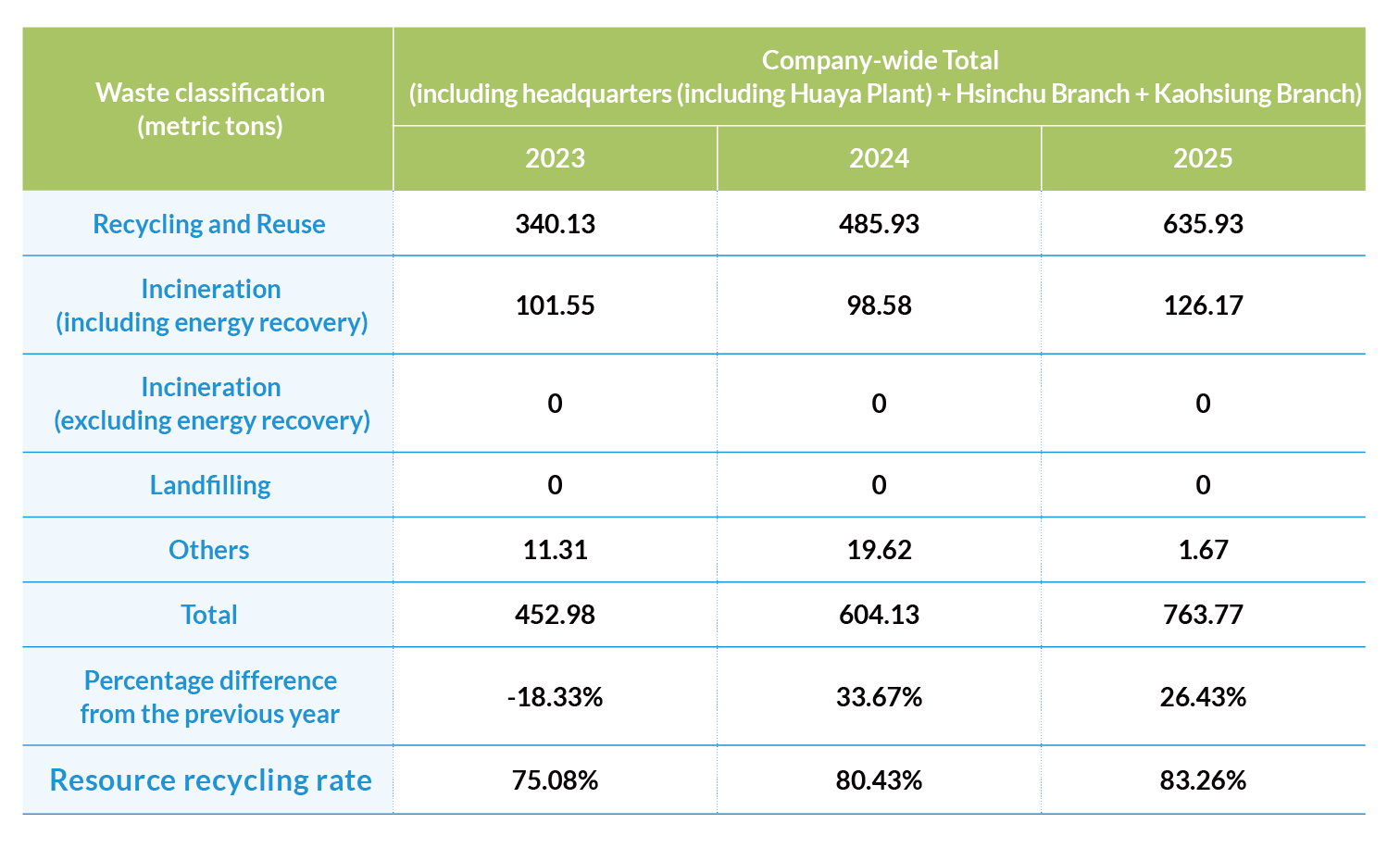
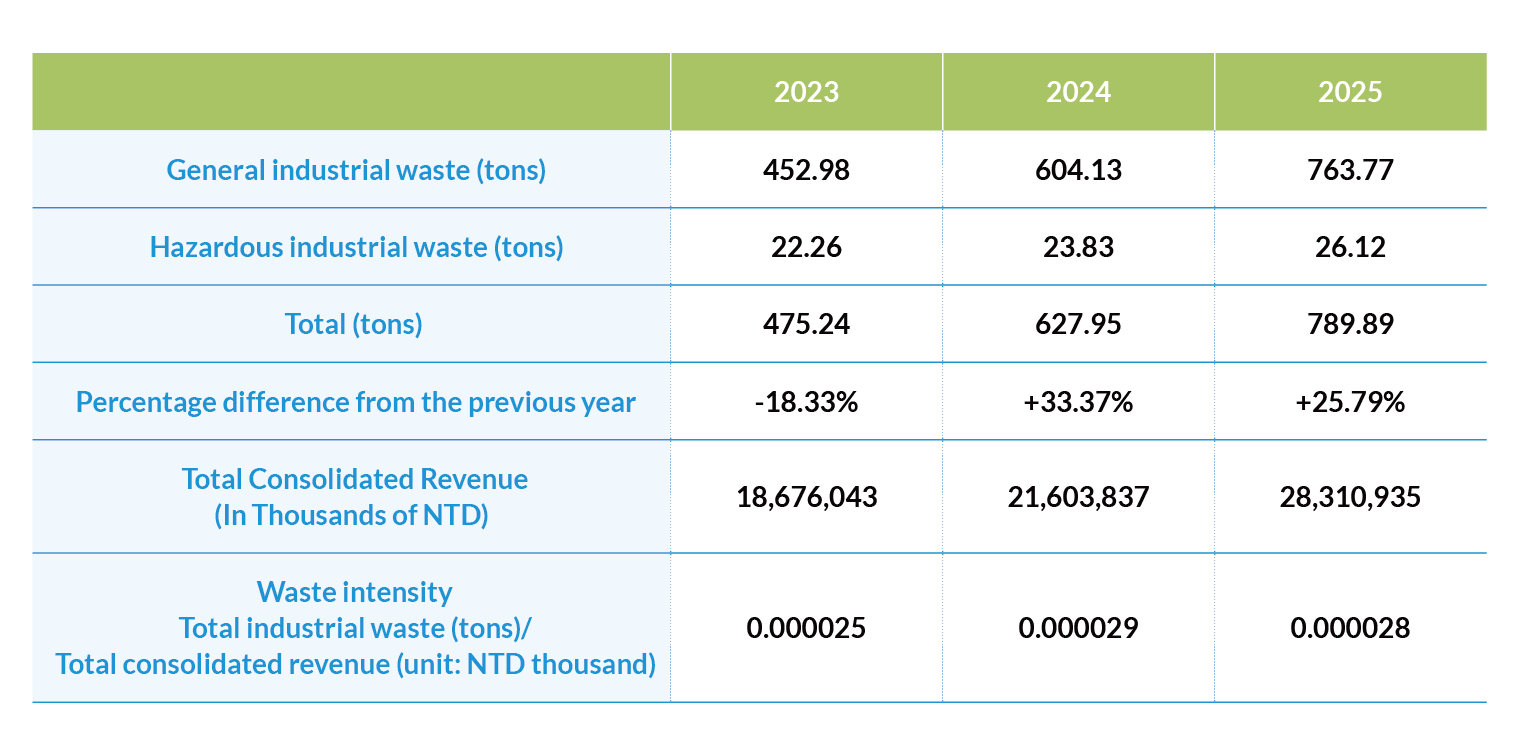
Chroma manages waste at each site primarily through classification, waste and carbon reduction, and pollution prevention. The Company strictly complies with environmental laws and regulations at its operating locations, fully implements waste management policies, and actively reduces waste generation through the purchase, recycling, and reuse of scraps, as well as paid disposal services. We conduct regular audits and disclose our environmental performance results through ISO 14001 certification by a third-party verification agency every year.
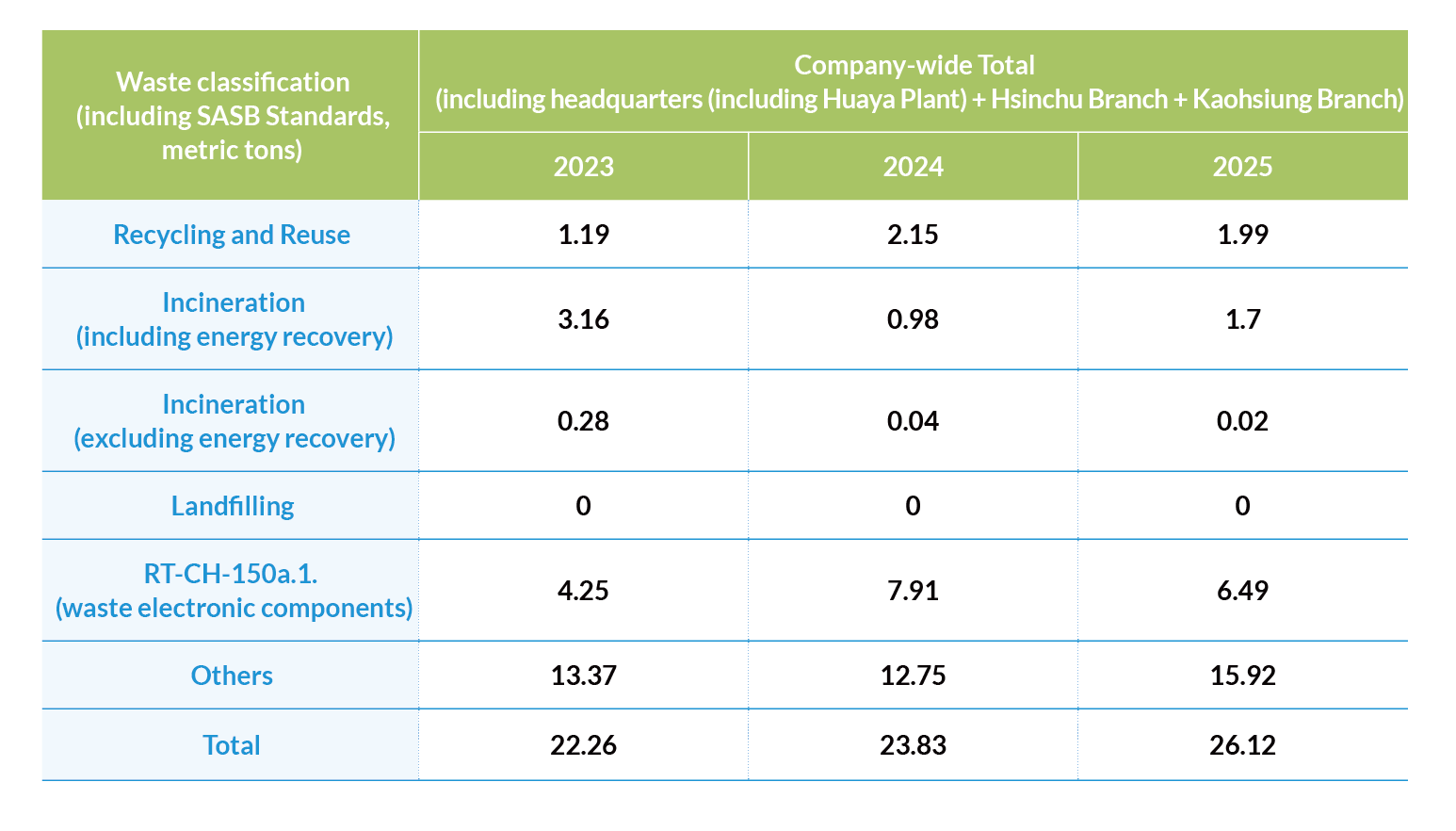
The waste generated during Chroma's operations includes "general industrial waste" and "hazardous industrial waste." All industrial waste is handled by licensed contractors in accordance with local regulations, transported off-site for proper treatment, and classified and recorded by weight based on disposal manifests and weighbridge data. General industrial waste is reused or otherwise treated based on its category, while "hazardous industrial waste" is rendered harmless in accordance with local regulations. Investigations have confirmed that Chroma ATE's sites do not generate process wastewater or process exhaust gases (acidic, alkaline, or volatile organic compounds VOCs). In addition, we promote the concept of "resource recycling and waste reduction" at all sites to encourage company-wide waste reduction from the inside out.