
R&D and Innovation
Chroma started with display testing, with a vision of developing precise, reliable, and unique testing instruments, and has gradually expanded into nine major product categories, including power electronics, passive components, and semiconductor and IC design testing. To meet customer demands for green products, the Company not only reduces the energy consumption of its equipment but also actively develops energy recovery equipment that recovers energy traditionally dissipated as heat back to the power grid, significantly reducing energy usage. In addition, Chroma continuously enhances the accuracy, testing speed, and reduction of size and weight of its testing equipment developed in-house to help users improve production efficiency. All of the above actions demonstrate Chroma's efforts as a member of the global community to address the threat of global warming.
R&D Strategy Highlights

Chroma actively promotes green product R&D and manufacturing with the goal of environmental sustainability, focusing on hazardous substance management, improving energy efficiency of power products, and increasing product recycling rates. To enable users to utilize testing equipment more efficiently while reducing energy consumption, technological innovation plays an important role in this process. Each year, Chroma develops a technology roadmap based on the Company's business direction. Under the principle of not duplicating manpower on the same technology projects, R&D units coordinate to develop different innovative technologies or enhance the performance of existing technologies. In addition, the Innovative Technology R&D Center focuses on researching core and advanced technologies to prepare for the technologies required for new products 2–5 years into the future. By maximizing manpower utilization, the aim is to increase the coverage of green equipment.
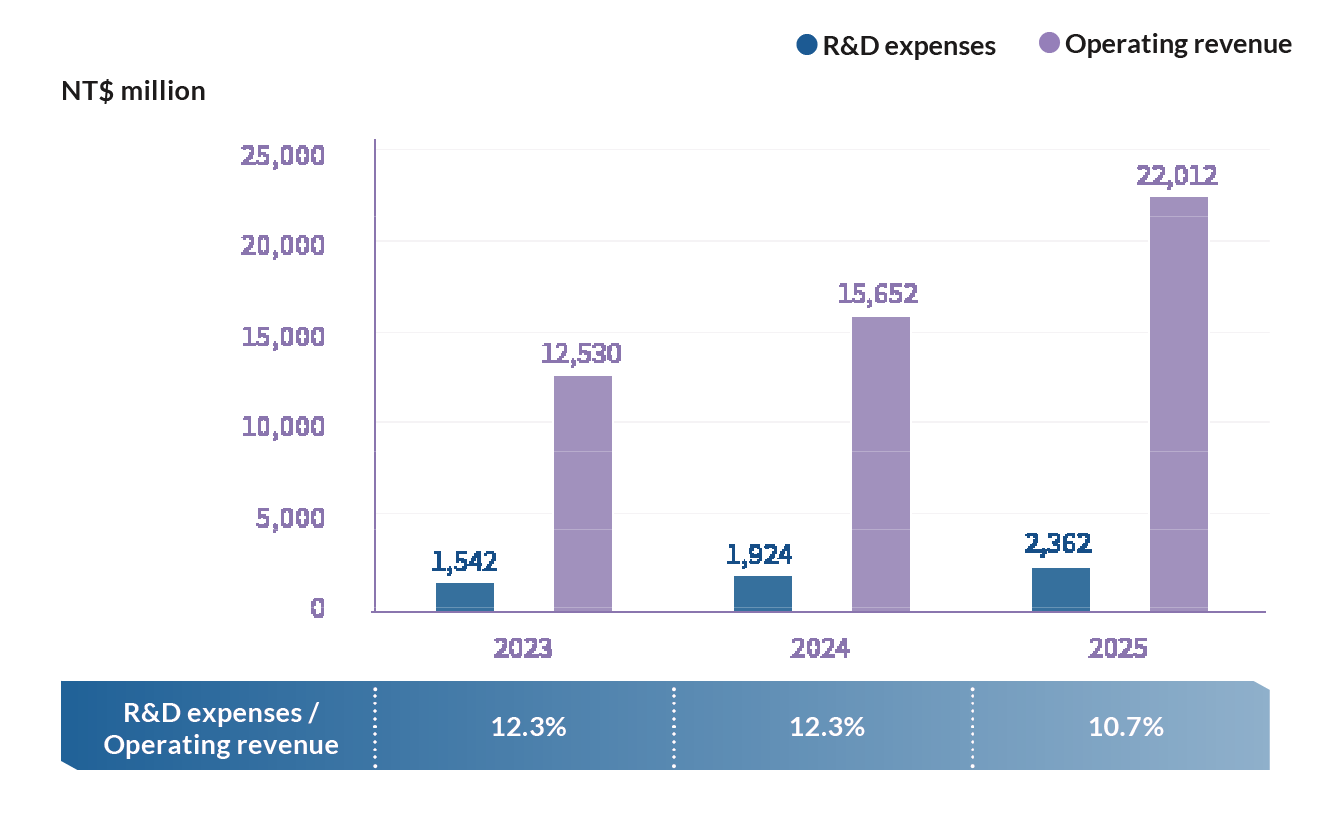
Number of Patents Granted (Intellectual Property)
Within Chroma, an innovative culture and environment is actively fostered. Each year, the company rewards teams and individuals for their performance in technological innovation and product performance enhancement through the Innovation Technology Award and the Outstanding Engineer selection. In addition, the company also actively seeks external technological innovation, leveraging external resources to accelerate Chroma's accumulation of technological capabilities.
Through the dedicated efforts of over 700 R&D personnel, innovative technologies have been transformed into patents. In 2025, 56 domestic patent applications were granted, including 46 invention patents, 9 utility model patents, and 1 design patent. Patents were filed and granted in Taiwan, Mainland China, and the United States. The number of granted patents has increased year by year, demonstrating Chroma's efforts in technological innovation and its emphasis on intellectual property rights.
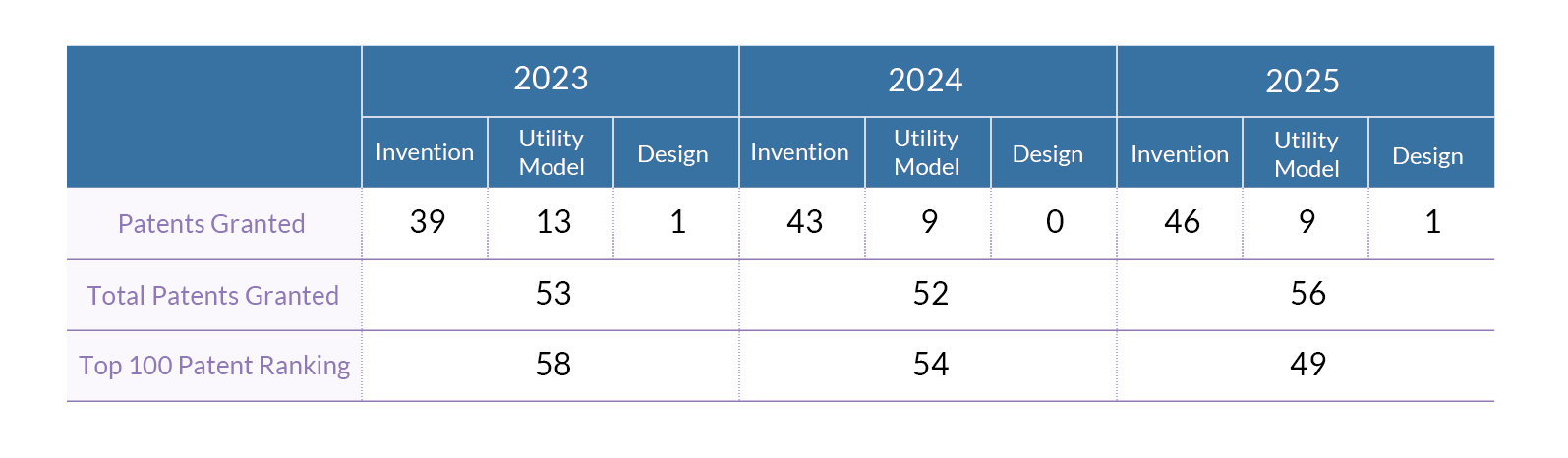
*Note: The count of invention and utility model patents for 2023 is now presented based on certificates granted. The basis for the Top 100 patent ranking has been changed from the number of patents filed to the number of invention patent granted. Additionally, the 2024 Top 100 patent ranking contained a numerical error, which has been corrected to reflect the invention patent ranking.
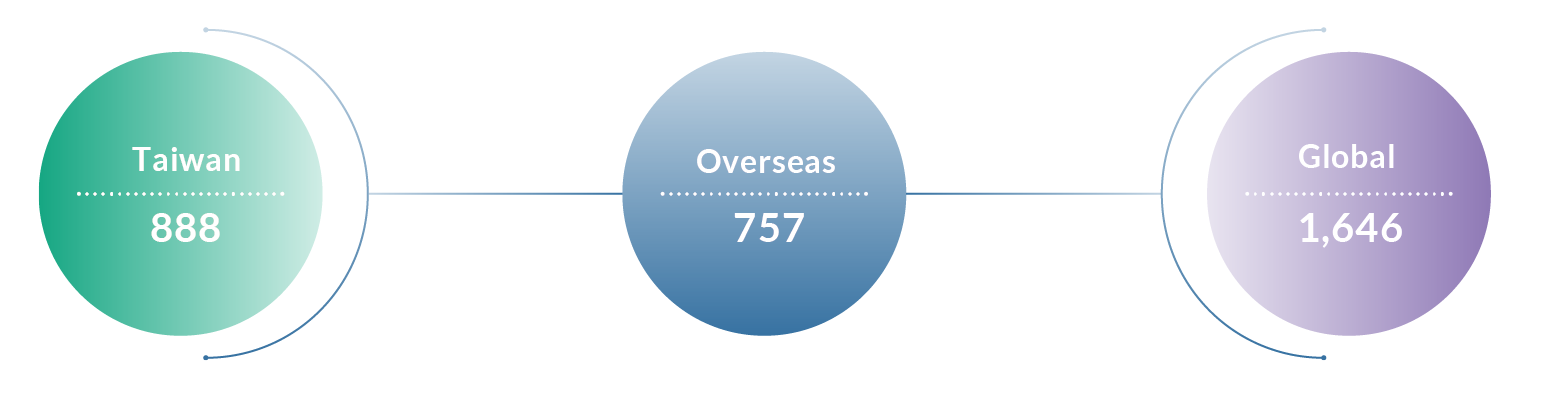
Cumulative Statistics of Approved Patents as of December 31, 2025
Sustainable Design
Between 2020 and 2025, Chroma's energy recovery testing equipment has cumulatively reduced 409,540 tons of carbon emissions. To reduce the energy consumption of new products throughout their life cycle, Chroma has established sustainable design and green labeling regulations to guide energy conservation during product development and subsequent operation. These regulations enable responsible units at each stage to propose specific measures to reduce energy loss, promote energy conservation and carbon reduction, and enhance the Company's sustainability performance. The regulations are still under discussion and are scheduled to be officially implemented in 2026. They will be reviewed as part of the new product development process.
In the new product sustainable design self-assessment and verification flowchart, during the design planning stage, the R&D team must first conduct a self-assessment and evaluate the effectiveness of sustainability measures. During the design review, the results of the self-assessment must be fully presented, and the lowest-performing items are identified for improvement to achieve higher standards. After entering the design verification stage, the R&D team presents the actual results of the implemented improvements.
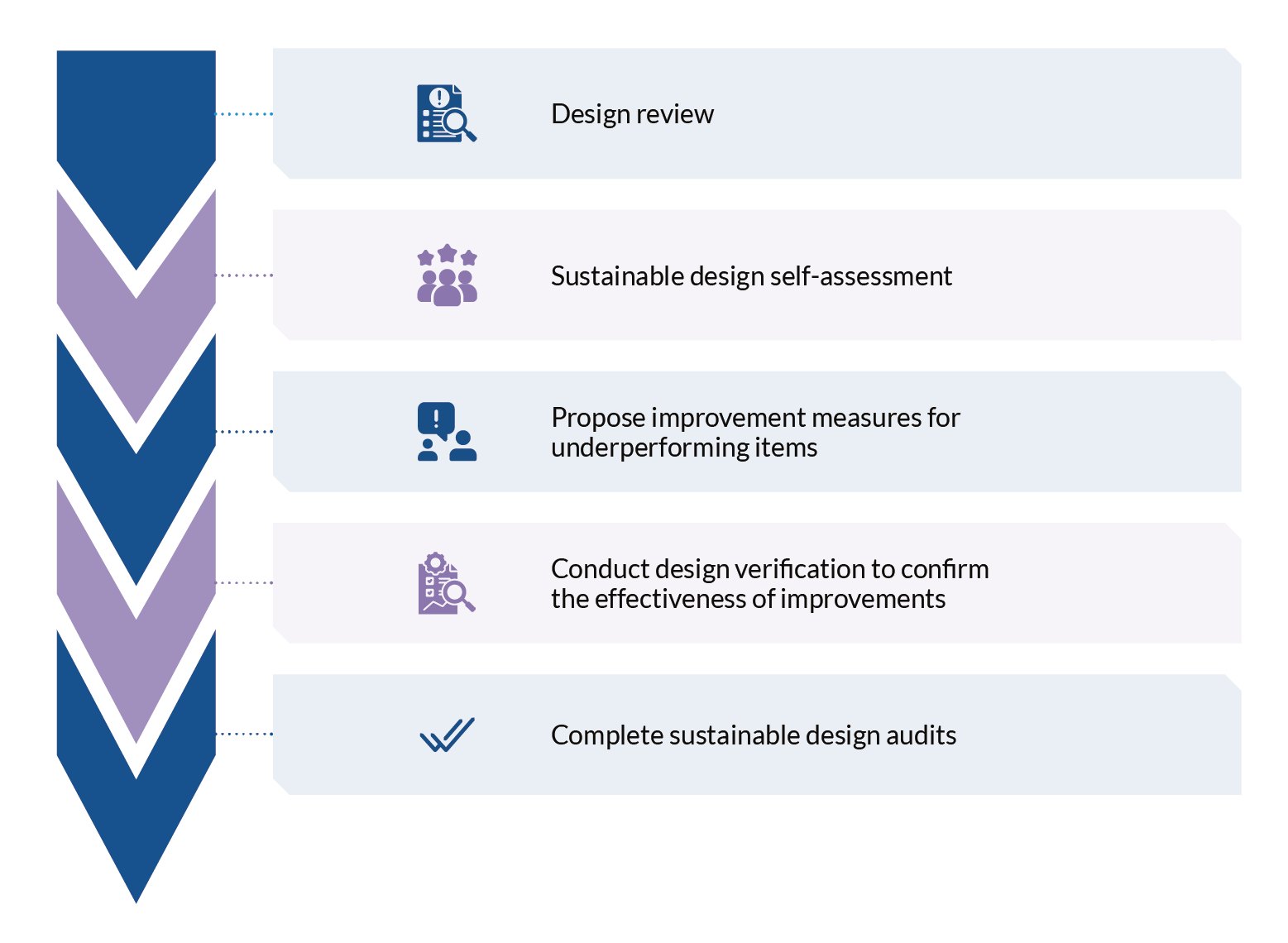
Chroma adheres to the principle of continuous improvement and is committed to promoting the concept of sustainable product design. It has developed a "Sustainable Materials Policy" to drive the adoption of sustainable materials, enabling the sustainable use of resources and fostering a green circular economy model. Based on the characteristics of the product lifecycle, the Company has established comprehensive energy-saving and carbon-reduction management measures and new product design guidelines. Integrate environmental protection and resource efficiency strategies at every stage―from R&D, manufacturing, distribution, and use to recycling―to ensure that product design and development meet environmental sustainability requirements.
Product Design with Low Resource Usage
Including measures such as "reducing the number of components in the product or using shared modules," "using simulation or other effective tools to reduce the number of design revisions and shorten time, thereby reducing resource consumption," and "high-efficiency, high-quality testing and verification measures."
R&D personnel should make good use of innovative and digital technologies to reduce the number of product components, lower the carbon footprint, and improve resource efficiency. Additionally, during the new product or module development stage, priority should be given to the design and planning of shared modules. By using shared modules, energy and resource consumption during procurement and transportation can be effectively reduced, enhancing supply chain operations and shortening development cycles.
Moreover, during the R&D process, continuous improvement of computer-aided design (CAD) and engineering simulation (CAE) technologies in the fields of electronics, mechanics, and optics should be pursued to verify design feasibility early, thereby reducing trial and error and avoiding resource waste. In terms of product verification, high-efficiency, energy-saving, and fully comprehensive testing technologies should be developed to reduce manpower input while ensuring verification efficiency and quality.
Component Use Control and Reduction
In raw materials, components, auxiliary materials, or packaging materials, an eco-design concept is implemented. According to Chroma's "Controlled Substances Standards for Materials," the Company's environmental controlled substances are categorized into the following five types for control. The R&D unit must adhere to these measures when developing new products:
- RoHS restricted substances, in compliance with the EU RoHS Directive and China's "Administrative Measures on the Control of Pollution from Electronic Information Products," prohibiting or restricting the use of hazardous chemical substances.
- REACH SVHC restricted substances, as announced by the European Chemical Agency (ECHA), substances of very high concern (SVHC) that are highly hazardous to humans and the environment.
- Other restricted substances under relevant regulations, as stipulated by the main trading countries' laws prohibiting or restricting hazardous substances, with reference to IEC 62474 Material Declaration Standard for the electrical and electronic industry.
- Ozone Depleting Substances (ODS), controlled chemical substances announced under the Montreal Protocol.
- ELV and GADSL restricted substances, as defined in the EU End-of-Life Vehicles Directive and the Global Automotive Declarable Substance List (GADSL).
In addition, suppliers are required to sign an Environmental Protection Declaration and a Supplier Declaration of Non-Use of SVHC Substances and Non-Use of Conflict Minerals to ensure that products continue to comply with relevant regulatory requirements after mass production, moving Chroma's products toward sustainable management.
Green Chroma Label
As a measurement equipment provider, Chroma focuses not only on its own energy conservation and carbon reduction efforts, but also on helping users effectively lower carbon emissions in their production and manufacturing processes through the use of its instruments and equipment. Based on this concept, Chroma introduced the internal "Green Chroma Label" system to encourage all employees to plan, research, develop, and produce instruments and equipment that help users reduce carbon emissions.
Green Chroma Label Evaluation Indicators
The Company assesses whether its products meet the following criteria at each stage of their life cycle, from distribution and sales to product use and waste disposal:
- Low energy consumption during use.
- Reduced transportation and installation resource requirements, improved capacity, and lower customer investment costs.
- Low-noise design to avoid adverse impacts on users' physical and mental well-being. These criteria are used to determine whether new products qualify for the Green Chroma Label.
Products that pass review are affixed with a Green Chroma Label on the back of the instrument to indicate their energysaving performance. Currently, the Green Chroma Label is open to applications from all of Chroma's product lines.